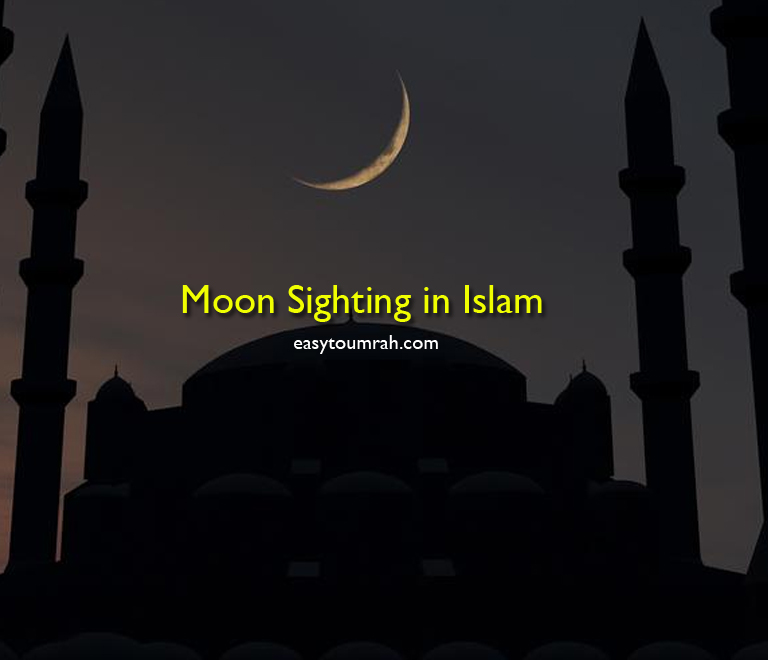
Moon Sighting in Islam: Significance, Rules, and Common Practices
Introduction
Moon sighting in Islam plays a vital role in determining important religious events such as the beginning and end of Ramadan, Eid al-Fitr, and Eid al-Adha. The Islamic calendar follows a lunar system, making the sighting of the new crescent moon (hilal) essential for marking each month. In this blog, we will explore the religious significance of moon sighting in Islam, Quranic and Hadith evidence, scholarly opinions, modern scientific approaches, and how Muslims around the world observe this practice today.
Understanding Moon Sighting in Islam
Moon sighting refers to the physical observation of the new crescent moon (hilal) to determine the start of a new Islamic month.
Why the Moon Is Important in Islam
- The Islamic calendar is lunar, consisting of 12 months
- Each month begins with the sighting of the new moon
- Religious obligations depend on accurate moon sighting
Allah says in the Qur’an:
“They ask you about the new moons. Say, they are measurements of time for the people and for Hajj.”
— Surah Al-Baqarah (2:189)

Ultra-X Night Vision Goggles
Deliverable
OWN THE NIGHT! Spot Threats Before They Spot You with Tactical Night Vision
Religious Evidence for Moon Sighting
Moon Sighting in the Qur’an
The Qur’an clearly establishes the moon as a timekeeping tool for Islamic rituals.
Moon Sighting in Hadith
The Prophet Muhammad ﷺ said:
“Fast when you see it (the moon) and end the fast when you see it.”
— Sahih al-Bukhari & Sahih Muslim
This Hadith forms the foundation for moon sighting practices in Islam.
Methods of Moon Sighting in Islam
1. Naked-Eye Moon Sighting
Traditionally, Muslims rely on physically seeing the crescent moon.
Conditions for Valid Sighting
- Clear visibility
- Trustworthy Muslim witnesses
- Sighting after sunset
2. Astronomical Calculations
Some scholars permit using scientific calculations to support or confirm sightings.
Modern Applications
- Use of telescopes
- Lunar visibility charts
- Global moon sighting data
Many contemporary scholars state that calculations can assist moon sighting but should not completely replace visual confirmation.
Local vs Global Moon Sighting
Local Moon Sighting
- Each region observes the moon independently
- Followed by many traditional scholars
Global Moon Sighting
- A single sighting accepted worldwide
- Promotes unity among Muslims
Both views are supported by Islamic jurisprudence, leading to differences in observance dates.
Moon Sighting for Ramadan and Eid
Ramadan Moon Sighting
- Determines the start of fasting
- If moon is not seen, Sha’ban completes 30 days
Eid Moon Sighting
- Marks the end of Ramadan or Hajj
- Joyous confirmation after a month of worship
Common Challenges in Moon Sighting
- Weather conditions
- Conflicting reports
- Technological limitations
- Differences in scholarly opinions
Despite these challenges, moon sighting remains a deeply spiritual practice for Muslims worldwide.
People Also Ask (FAQs)
1. Why is moon sighting important in Islam?
Moon sighting determines Islamic months and ensures religious acts are performed at the correct time.
2. Can Muslims rely on astronomical calculations?
Some scholars allow calculations as a supporting tool, while others require physical sighting.
3. Why do Muslims start Ramadan on different days?
Differences occur due to local moon sightings, weather, and varying scholarly interpretations.
4. What happens if the moon is not sighted?
The current month is completed as 30 days, following the Prophet’s guidance.
Conclusion
Moon sighting in Islam is a sacred practice deeply rooted in the Qur’an and Sunnah. It reflects obedience to divine guidance, unity in worship, and reliance on natural signs created by Allah. While modern tools have enhanced accuracy, the spiritual essence of moon sighting remains unchanged. Understanding its principles helps Muslims appreciate both the religious wisdom and practical challenges behind this timeless tradition.