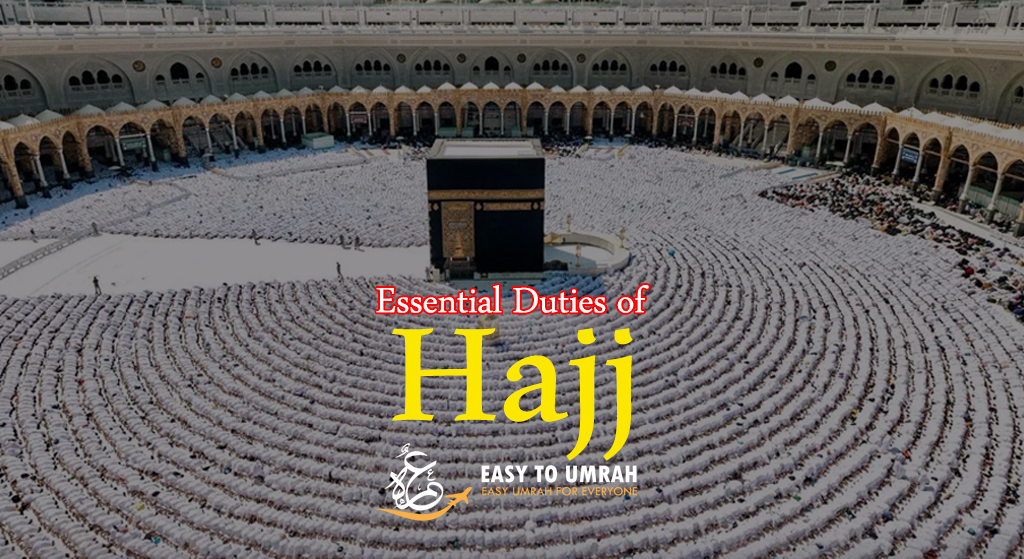
Essential Duties of Hajj
Essential Duties of Hajj: A Clear Guide to the Pillars, Obligations and Rites
Hajj is one of the five pillars of Islam and the greatest pilgrimage a Muslim can undertake. It is obligatory once in a lifetime for every Muslim who is physically and financially able. Because Hajj has several required acts, many pilgrims ask the same question: what exactly must I do, and what happens if I miss something?
This guide explains the essential duties of Hajj, from the pillars to the obligatory acts and the sunnah, in plain language. If you are also planning Umrah, you will see where the two journeys overlap.
Please note: scholars of different schools of thought (madhahib) differ on some details, such as how certain acts are classified. Follow the guidance of a qualified scholar or your Hajj group leader.
What Are the Duties of Hajj?
Scholars usually group the duties of Hajj into three levels:
- Arkan (pillars): essential acts. Hajj is not valid without them.
- Wajibat (obligatory acts): required acts. Missing one usually requires an expiation, such as an animal sacrifice (dam).
- Sunan (recommended acts): acts that earn extra reward but carry no penalty if missed.
The Pillars of Hajj (Arkan)
1. Ihram (Sacred State and Intention)
Ihram means making the intention for Hajj and entering the sacred state, usually at the miqat. Men wear two unstitched white cloths, and women wear modest everyday clothing. While in ihram, certain actions are restricted, including cutting hair or nails, using perfume, and marital relations.
2. Standing at Arafat (Wuquf)
This is the heart of Hajj. Pilgrims gather at the plain of Arafat on 9 Dhul Hijjah to pray, reflect and make dua. If a pilgrim misses Arafat entirely, the Hajj is not valid. The Prophet ﷺ said, “Hajj is Arafat.”
3. Tawaf al-Ifadah (Tawaf of Hajj)
After Arafat and Muzdalifah, pilgrims return to Makkah and circle the Kaaba seven times. This tawaf is also called Tawaf al-Ziyarah.
4. Sa’i Between Safa and Marwa
Pilgrims walk seven times between the hills of Safa and Marwa, remembering the trust and perseverance of Hajar. Most scholars count sa’i as a pillar. The Hanafi school treats it as an obligatory act (wajib) instead.
The Obligatory Acts of Hajj (Wajibat)
- Entering ihram from the miqat: not passing the boundary without ihram
- Staying at Arafat until sunset: for those who arrive during the day
- Spending the night at Muzdalifah: and collecting pebbles
- Stoning the Jamarat: throwing pebbles at the three pillars in Mina on the prescribed days
- Offering the sacrifice (hady): required for those performing Hajj Tamattu or Qiran
- Shaving or trimming the hair: men shave (halq) or trim (taqsir), and women trim a small portion
- Spending the nights of Mina: during the days of Tashreeq
- Tawaf al-Wada (farewell tawaf): the final tawaf before leaving Makkah
Recommended Acts (Sunan)
- Tawaf al-Qudum (arrival tawaf), for those performing Hajj Ifrad or Qiran
- Increasing dua, dhikr and recitation of the Quran
- Praying two rakahs behind Maqam Ibrahim after tawaf
- Drinking Zamzam and making dua
- Reciting the Talbiyah often during the journey
The Three Types of Hajj
- Tamattu: perform Umrah first, leave ihram, then enter ihram again for Hajj. This is the most common type, and it requires a sacrifice.
- Qiran: combine Umrah and Hajj in one ihram. This requires a sacrifice.
- Ifrad: perform Hajj only, with no Umrah. No sacrifice is required.
Step-by-Step: The Days of Hajj
8 Dhul Hijjah (Day of Tarwiyah)
Enter ihram and travel to Mina. Pray and rest there.
9 Dhul Hijjah (Day of Arafat)
Stand at Arafat from midday until sunset, making dua. After sunset, travel to Muzdalifah, pray, rest and collect pebbles.
10 Dhul Hijjah (Eid al-Adha)
Stone Jamrat al-Aqaba, offer the sacrifice, shave or trim, and perform Tawaf al-Ifadah and sa’i.
11 to 13 Dhul Hijjah (Days of Tashreeq)
Stay in Mina and stone all three Jamarat each day. Pilgrims may leave on the 12th or stay until the 13th.
Before Leaving Makkah
Perform Tawaf al-Wada.
Hajj vs Umrah: What Is the Difference?
| Hajj | Umrah | |
|---|---|---|
| Ruling | Obligatory once in a lifetime for those able | Recommended (some scholars hold it obligatory once) |
| Timing | Specific dates, 8 to 13 Dhul Hijjah | Can be performed most of the year |
| Main rites | Ihram, Arafat, Muzdalifah, Mina, tawaf, sa’i | Ihram, tawaf, sa’i, halq or taqsir |
| Duration | Several days | A few hours, plus travel time |
Umrah does not replace Hajj, but it is a deeply rewarding act of worship and a helpful way to prepare for the pilgrimage. If you are planning one, you can start your Umrah booking at any time of year outside the Hajj season.
What If You Miss or Make a Mistake in a Duty?
- Missing a pillar means the Hajj is not complete, and the act must be performed.
- Missing an obligatory act usually requires an expiation (dam), such as sacrificing an animal.
- Missing a sunnah has no penalty.
Ask a qualified scholar or your group leader straight away if you are unsure. Most situations have a ruling, so do not panic.
Practical Tips to Fulfil the Duties of Hajj with Ease
- Learn the rites beforehand. Attend a Hajj course or study a trusted guide.
- Check the official Hajj process. Hajj requires an official permit, and Saudi authorities set the rules and registration routes. Confirm the current procedure for your country through official or authorised channels.
- Prepare physically. Hajj involves long walking in heat and large crowds.
- Travel with a reputable group and a knowledgeable guide.
- Stay patient and kind. Hajj tests patience, and good character is part of its reward.
- Keep your intention sincere. Hajj is an act of worship, not a trip to rush through.
Prepare for Hajj with Umrah First
Many pilgrims perform Umrah before Hajj to become familiar with Makkah, tawaf and sa’i. EasyToUmrah can help you plan your Umrah booking with clear packages, hotel options and visa guidance, so your first visit to the Haramain is calm and well prepared.
[Start Your Umrah Booking] | [View Umrah Packages]
Frequently Asked Questions
What are the essential duties of Hajj?
The pillars are ihram, standing at Arafat, Tawaf al-Ifadah and sa’i (according to the majority). Obligatory acts include Muzdalifah, stoning the Jamarat, the sacrifice, shaving or trimming, the nights at Mina and the farewell tawaf.
Which part of Hajj is the most important?
Standing at Arafat. Without it, Hajj is not valid.
Is Hajj the same as Umrah?
No. Hajj has fixed dates and more rites. Umrah can be performed most of the year and is shorter.
Can I perform Hajj without a permit?
Saudi authorities require an official permit to perform Hajj. Check the current rules for your country before you plan.
Who must perform Hajj?
Every adult Muslim who is physically and financially able, once in a lifetime.
What if I forget a duty of Hajj?
Ask a qualified scholar. Depending on the duty, you may need to perform it or give an expiation.
Final Thoughts
The duties of Hajj may look like a long list, but each one has meaning, from the humility of ihram to the stillness of Arafat. Learn them in advance, prepare your body and your heart, and seek knowledgeable guidance. May Allah accept your Hajj and Umrah and make your journey easy.