
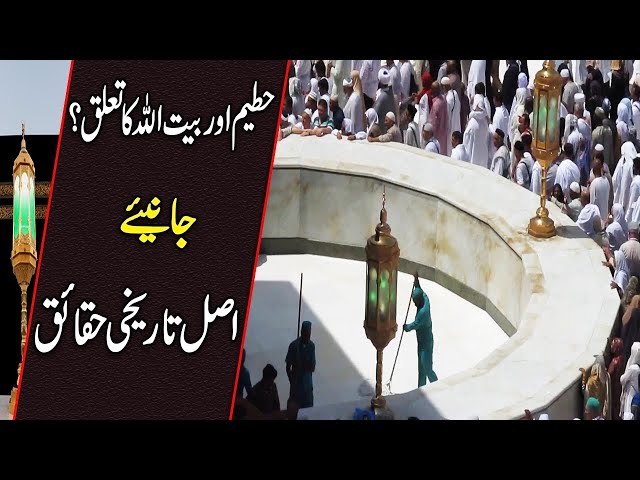
Hateem: A Sacred Space of Mercy and History in Masjid al-Haram
Introduction
The Hateem, also known as Hijr Ismail, is one of the most spiritually significant and historically rich areas in Masjid al-Haram. Situated adjacent to the Kaaba, the Hateem is deeply revered by Muslims worldwide for its connection to Prophet Ibrahim (A.S) and Prophet Ismail (A.S). In this blog, we will explore the history, structure, and spiritual importance of the Hateem, along with tips for performing worship there. Whether you’re planning for Umrah, Hajj, or simply seeking knowledge, this guide will give you an in-depth understanding of the sacred Hateem area.
What is Hateem? Understanding Its True Meaning
The Origin and Historical Background
The Hateem is a semi-circular wall surrounding an area that was originally part of the Kaaba. Historical narrations tell us:
- When the Quraysh rebuilt the Kaaba before the prophethood of Muhammad (S.A.W), they had insufficient halal resources.
- They reconstructed a smaller cube, leaving a portion outside—this area became the Hateem.
- It is believed that Prophet Ibrahim (A.S) originally built the Kaaba including the Hateem area within its structure.
The Role of Hajrah and the Family of Prophet Ibrahim (A.S)
Islamic scholars link the Hateem to the grave of Hajrah (A.S) and possibly Prophet Ismail (A.S), though this is debated. Regardless of its physical significance, its spiritual value is universally acknowledged.
The Spiritual Significance of the Hateem
Why Muslims Pray in the Hateem
The Hateem is one of the most desirable spots in Masjid al-Haram for voluntary prayers because:
- Praying inside the Hateem is considered equivalent to praying inside the Kaaba.
- The Prophet Muhammad (S.A.W) performed Salah in the Hateem, highlighting its importance.
- Many pilgrims feel a deep sense of peace and closeness to Allah in this blessed space.
Benefits of Praying in the Hateem
- A place where dua is highly accepted
- A location filled with Allah’s mercy and blessings
- A sanctuary of historical and spiritual energy
Architecture and Structure of the Hateem
How the Hateem Looks Today
The Hateem is easily recognizable due to:
- Its semi-circular white marble wall, about 1.3 meters high
- Its open-roof design
- Its close proximity to the Kaaba’s northwest wall
Key Structural Features
- Diameter: Approximately 2.03 meters
- Area: About 14 meters in length
- Marked space where many pilgrims gather for prayer
How to Pray in the Hateem During Hajj and Umrah
Step-by-Step Guide
Performing Salah in the Hateem can be challenging during peak times. Here’s how to do it properly:
Steps to Pray in the Hateem
- Perform Tawaf if you are already in a state of Ihram.
- Look for an opening in the Hateem area.
- Stand calmly and avoid pushing.
- Perform two nafl rak’ahs with full concentration.
- Raise your hands in dua with sincerity.
Tips for a Smooth Experience
- Best time: Late night or early morning when the crowd is thinner.
- Avoid rush hours close to Salah times.
- Stay respectful and patient—considering its limited space.
Interesting Facts About the Hateem
- The word “Hateem” some describe as “broken” or “ruined” referring to the part left outside the Kaaba.
- Many scholars believe Hajrah (A.S) is buried here.
- During floods in Makkah historically, the Kaaba and Hateem area were often submerged due to their location.
FAQs: People Also Ask
1. Is praying inside the Hateem the same as praying inside the Kaaba?
Yes, according to many scholars, praying in the Hateem is equivalent to praying inside the Kaaba, as this area was originally part of the Kaaba’s structure.
2. Why is the Hateem always crowded?
It is one of the most spiritually blessed places in Masjid al-Haram. Pilgrims often rush to pray here due to its immense reward.
3. Who is buried in the Hateem?
Some historians believe Hajrah (A.S) and possibly Prophet Ismail (A.S) may be buried in the Hateem, though this is not universally agreed upon.
4. Can women pray in the Hateem?
Yes, women can pray in the Hateem just like men. Access depends solely on crowd management and timing.
Conclusion
The Hateem is more than a historical remnant; it is a symbol of devotion, sacrifice, and divine blessing. For pilgrims, it serves as a powerful reminder of the legacy of Prophet Ibrahim (A.S) and his family. Whether you’re visiting soon or simply seeking knowledge, understanding the spiritual value of the Hateem enriches your connection with Islam’s sacred heritage.


