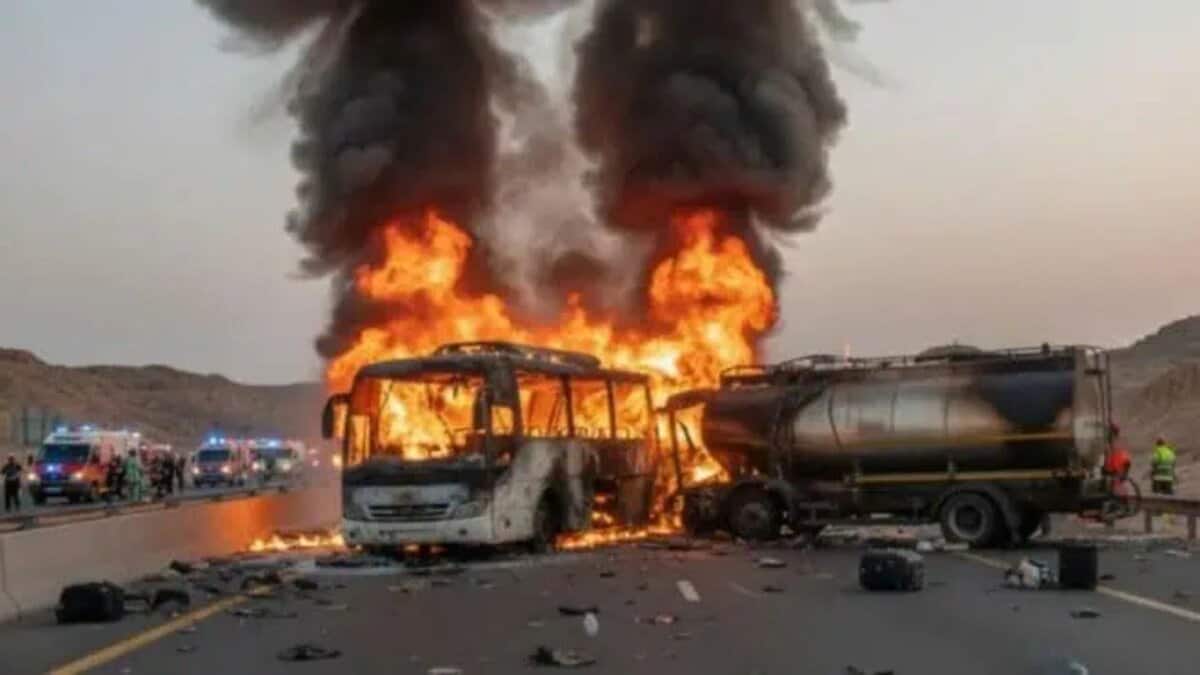
Tragic Saudi Arabia Bus Crash: 45 Pilgrims Dead as Umrah Journey Turns Fatal
Introduction
A tragic Saudi Arabia bus crash has stunned the world as a bus carrying 46 Indian Umrah pilgrims collided with a diesel tanker near Medina, leaving at least 45 people dead and only one survivor. This devastating incident underscores critical safety concerns during pilgrimage travel and raises pressing questions about road regulations, emergency response, and the vulnerable nature of pilgrim transport. In this blog post, we’ll break down what happened, why it’s deeply concerning, and how such tragedies might be prevented in future.
What Happened: Overview of the Crash
The Incident Details
- The crash occurred on 17 November 2025, around 1:30 a.m. near Mufrihat, approximately 25 km from Medina, according to Gulf News.
- The bus was traveling from Mecca (Makkah) to Medina (Madinah), carrying 46 pilgrims.
- It collided with a diesel tanker, triggering a massive fire that engulfed the bus.
- Only one person survived, reportedly a 24-year-old seated near the driver.
- According to Indian authorities, 45 pilgrims died, many of whom were from Hyderabad, Telangana.
Why It’s Significant
The Human Cost
- The majority of the victims were Indian pilgrims traveling for Umrah.
- In a particularly heartbreaking detail, 18 members of a single Hyderabad family — spanning three generations, including nine children — were among those killed.
- The one survivor is reportedly receiving treatment in a Saudi hospital.
- Indian and Saudi authorities have both expressed deep condolences.
Legal and Regulatory Repercussions
- Saudi traffic authorities have launched legal procedures and are investigating the crash.
- The Indian Consulate in Jeddah has established a 24/7 helpline (8002440003) to support affected families.
- The crash is fueling renewed scrutiny about pilgrim transport safety, especially for long-haul journeys between holy sites.
Broader Context: Road Safety in Saudi Arabia
Historical Precedents
- Saudi Arabia has seen multiple deadly bus accidents involving pilgrims. For instance, in March 2023, at least 20 people died when a pilgrim bus overturned in Asir Province due to alleged brake failure.
- In September 2023, a bus flipped in Al Wajh, killing four and injuring seven.
- In February 2025, a bus crash injured 23 students traveling on a mountainous road.
Safety Trends and Challenges
- According to a World Health Organization report, Saudi Arabia made strides in reducing traffic deaths (a ~35% reduction between 2016 and 2021), but accidents remain a serious concern.
- The transport of pilgrims — especially during Umrah and Hajj — often involves long, overnight journeys, increasing risk.
- Regulatory oversight, driver training, vehicle maintenance, and emergency infrastructure are all critical but challenging to manage at scale.
Potential Factors Behind the Crash
What Might Have Gone Wrong
- Collision Dynamics
- The bus reportedly collided with a diesel tanker, which increased the risk of fire.
- It’s unclear whether the bus was moving or stationary at the time of impact.
- Vehicle Conditions
- The intense fire suggests possible poor fire resistance or lack of safety features.
- Maintenance issues (e.g., brakes, engine heat) may have played a role.
- Overnight Travel Risks
- The crash occurred in the early hours when most passengers were reportedly asleep, minimizing their capacity to react.
- Nighttime driving brings reduced visibility, driver fatigue, and slower emergency response.
- Regulatory Gaps
- Questions arise about transport regulation for pilgrim buses, especially during high-traffic periods like Umrah.
Impact and Reactions
International and Local Response
- Indian Government Reaction: High-level political figures, including Prime Minister Narendra Modi, expressed condolences.
- Hyderabad Community: The loss is being deeply felt in Hyderabad, with control rooms and helplines set up for families.
- Saudi Authorities: Law enforcement and traffic agencies are conducting a thorough investigation.
- Media & Public Sentiment: The tragedy has sparked widespread media coverage and mourning on social platforms.
What Can Be Done: Lessons & Prevention
Recommendations for Safer Pilgrim Transport
- Stricter Vehicle Inspection: Ensuring that buses used for pilgrim transport undergo rigorous safety checks (brakes, fire suppression systems).
- Regulated Travel Times: Consider limiting overnight pilgrim journeys or enforcing rest breaks for drivers.
- Emergency Preparedness: Equip buses with fire extinguishers, emergency exits, and communication tools.
- Driver Training: Pilgrim-route drivers should receive specialized training for long highway drives and emergency scenarios.
- International Cooperation: Countries whose citizens often travel for Umrah (like India, Pakistan) could work with Saudi authorities on shared safety standards.
- Public Awareness: Pilgrims can be informed about safe travel practices and the importance of traveling with reputable operators.
People Also Ask (FAQs)
People Also Ask
- Q: What caused the Saudi Arabia bus crash?
A: The crash happened after a bus carrying Umrah pilgrims collided with a diesel tanker near Medina, leading to a massive fire. - Q: How many people died in the bus crash?
A: At least 45 pilgrims lost their lives; 46 were on board, and only one person survived. - Q: Were the victims international pilgrims?
A: Yes, most of the victims were Indian Umrah pilgrims from Hyderabad, Telangana. - Q: Is Saudi Arabia taking action after this crash?
A: Yes. Saudi traffic authorities have launched legal procedures, and there’s an ongoing investigation into the crash.
Conclusion
The Saudi Arabia bus crash that claimed the lives of 45 Umrah pilgrims is a deeply tragic reminder of the vulnerabilities inherent in mass religious travel. While the spiritual journey of Umrah holds profound meaning, the safety of pilgrims must never be taken for granted. This incident underscores the urgent need for stricter regulations, better vehicle maintenance, and enhanced emergency preparedness.
We must learn from this tragedy — for the sake of all pilgrims who undertake these sacred journeys. Let us honor the memory of those lost by supporting improved safety measures, advocating for accountability, and keeping the affected families in our thoughts.