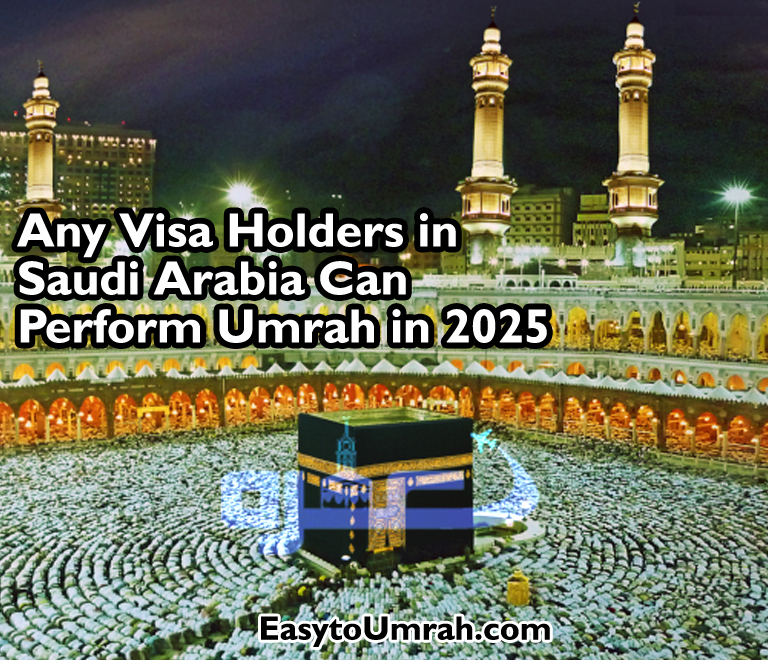
Any Visa Holders in Saudi Arabia Can Perform Umrah – Latest Rules & GuideIntroduction
For many Muslims around the world, performing Umrah is a deeply cherished aspiration. Historically, Saudi Arabia issued special Umrah visas and had restrictions on who could perform the minor pilgrimage. But now there is a major change: any foreign Muslim holding a valid Saudi visa — whether tourist, work, transit, family visit, or others — is eligible to perform Umrah during their stay in the Kingdom.
This new policy marks a significant step toward greater accessibility, aligning with Saudi Arabia’s Vision 2030 agenda to modernize religious tourism. In this article, we’ll walk you through what the rule change means, how to use the new Nusuk Umrah platform, eligibility nuances, step‑by‑step process, tips, and frequently asked questions.
Background: What Changed & Why It Matters
Previous Umrah Visa System
-
In the past, Muslims outside Saudi Arabia typically needed to apply specifically for an Umrah visa through their country’s Saudi consulate or via authorized travel agencies.
-
Some visa types, like tourist visas, were previously restricted (or not always accepted) for Umrah. For example, prior to this change, citizens from certain countries holding tourist or commercial visas were allowed to perform Umrah, but others were not.
-
Also, during the Hajj season (Dhu al‑Hijjah), Umrah was often restricted or suspended to manage crowd control.
The New Policy
-
As of October 2025, the Ministry of Hajj & Umrah officially confirmed that all valid visa holders in Saudi Arabia can perform Umrah during their stay, regardless of visa type (visit visas, tourist e‑visas, transit/stopover visas, work visas, etc.).
-
The reform is positioned within the broader Vision 2030 framework, under which Saudi Arabia aims to expand religious tourism and streamline pilgrimage services.
-
The Nusuk Umrah digital platform is part of the infrastructure enabling this change: pilgrims can select packages, obtain permits, book timings, and manage logistics conveniently online.
Implication: If you are already in Saudi Arabia (or plan to visit) under a valid visa, you no longer must obtain a separate Umrah visa—provided other procedural requirements are met. This opens new possibilities for expatriates, tourists, pilgrims en route, business travelers, and families.
Who Is Eligible? (All Visa Types Covered)
Under the new rule, the following categories of visa holders are explicitly mentioned as eligible to perform Umrah:
| Visa Type | Eligibility Status* | Notes / Examples |
|---|---|---|
| Tourist e‑visa | ✅ Eligible | Previously allowed only in certain countries |
| Family / personal visit visa | ✅ Eligible | Confirmed by Ministry statement |
| Work / employment visa / residence permit | ✅ Eligible | Residents and foreign workers can perform Umrah under this rule change |
| Transit / stopover visa | ✅ Eligible | Even those traveling through Saudi Arabia may be able to perform Umrah if conditions permit |
| Other visa categories (e.g. business visa, student) | ✅ Eligible | The Ministry’s language is inclusive of “other visa types” |
* “Eligibility” here means “allowed to perform Umrah subject to procedural requirements,” not automatic guarantee.
Important caveats to note:
-
The visa must be valid (i.e. not expired, not revoked).
-
Even though visa type is now more flexible, you must still secure an Umrah permit or slot (via Nusuk or the official platform) and comply with scheduling, quotas, and local rules.
-
During the Hajj season, restrictions or specific cutoffs may still apply (see below).
-
Some temporary suspensions or special measures may be enforced in exceptional years to manage crowding.
How to Perform Umrah Under the New System
Here is a step‑by‑step guide to performing Umrah as a visa holder under the new policy:
-
Ensure your visa status is valid
Check your visa type, entry stamp, and expiration date. Your stay in Saudi Arabia must be lawful when you apply for the Umrah permit. -
Download / use the Nusuk Umrah platform
The Nusuk platform is the official digital tool to manage Umrah permits, bookings, and packages.
Through it, you can:
– Choose a suitable package (accommodation, transport)
– Book your Umrah time slot
– Obtain your Umrah permit -
Book licensed accommodation via the platform
Your hotel or lodging must be licensed and confirmed through the Nusuk (or Nusuk Masar) system. Unauthorized hotel bookings may lead to rejection of permit. -
Obtain your Umrah permit / slot
Once you choose your time and package, the system issues your permit. Some slots (especially in peak times) may be limited. -
Travel to Mecca / Medina / perform rituals
Arrive at your assigned time, measure Ihram boundaries (if coming from outside Miqat), and complete the rituals (Tawaf, Sa’i, etc.) in accordance with the rules. -
Be aware of seasonal cutoff / restrictions
Even with full eligibility, there may be cutoff dates just before Hajj, after which Umrah may not be allowed, particularly close to Dhu al‑Hijjah.
Ensure your permit also covers the exit / departure window. -
Exit or depart within allowed time & abide by local rules
Make sure your stay (and Umrah performance) fits within your visa validity and local regulations.
Seasonal / Timing Considerations & Cutoffs
While the new rule is sweeping, there are still time-based constraints to be aware of:
-
Hajj season restrictions: During the Hajj period (Dhu al‑Hijjah), Umrah may be restricted or suspended to manage crowd flow. In past years, tourist visa holders were barred from performing Umrah during Hajj.
-
Cutoff dates prior to Hajj: In 2025, for example, there were reported cutoff dates for entering Mecca on Umrah, especially for those carrying special Umrah visas.
-
Exit/departure deadlines: Even if permitted to enter and perform Umrah, pilgrims may need to leave before specific deadlines once Hajj approaches.
-
Planning ahead is essential: Because slots are limited and many pilgrims are traveling, it’s wise to apply and reserve well before peak times.
Benefits & Impacts of the Change
This policy shift carries multiple benefits and implications:
-
Increased accessibility for pilgrims: removing the need for a dedicated Umrah visa opens the door for many more Muslims, including those already in Saudi Arabia or transit travelers.
-
Streamlined procedures: with the Nusuk digital platform, the process becomes simpler, transparent, and faster.
-
Boost for religious tourism: more pilgrims likely means more economic activity around Mecca, Medina, hospitality, transport, and services.
-
Alignment with Vision 2030: the change supports Saudi’s aim to diversify its economy and modernize religious services.
-
Better utilization of resources: improved management of permit slots, quotas, and crowd control through tech infrastructure.
However, some challenges remain:
-
Slot availability and congestion: high demand may result in competition for time slots.
-
Compliance enforcement: making sure all pilgrims follow rules (e.g. licensed hotels, correct permit times) is critical.
-
Public awareness: many prospective pilgrims might still be unaware of the new changes or how to navigate them.
Tips & Best Practices for Pilgrims
-
Register with Nusuk as early as possible — popular time slots fill fast.
-
Ensure your hotel booking is licensed and made through Nusuk / authorized channels to avoid permit rejections.
-
Keep visa and passport documents up to date and valid.
-
Monitor cutoff dates especially close to the Hajj period—don’t assume all times are open year-round.
-
Travel during off-peak days or seasons if possible to avoid crowds.
-
Stay updated with official Saudi and Ministry of Hajj & Umrah announcements, because rules can shift in response to capacity, safety, or health concerns.
-
Be flexible in your time planning—if your permit slot is delayed, have contingencies (e.g. extra days).
-
Use official support channels (Ministry helplines, support within Nusuk) if issues arise.
Frequently Asked Questions (FAQs)
Q1: Can I perform Umrah on a tourist visa under this new rule?
Yes — tourist (e‑visa) holders are explicitly included under the new eligibility. But you still need to obtain a permit via the Nusuk platform and adhere to slot availability and timing restrictions.
Q2: What about residents or those on work visas — are they allowed?
Yes, under the policy change, residents (work visa holders, expatriates) can perform Umrah during their permitted stay.
Q3: Are there visa types still excluded?
According to official statements, very few visa categories are excluded; the policy states all visa types are eligible. However, practical limitations (permit quotas, slot constraints) may still restrict access.
Q4: Can I perform Umrah during the Hajj season (Dhu al‑Hijjah)?
Typically no — during Hajj, authorities often restrict or suspend Umrah to manage crowd flow. Always check the current year’s schedule and announcements.
Q5: How do I get the Umrah permit or slot?
Via the Nusuk Umrah platform — choose your package, book your slot/time, and get your permit digitally.
Q6: Do I have to stay in a hotel booked through Nusuk / licensed accommodation?
Yes, your lodging must be licensed and booked through the official platform; otherwise, permit may be rejected.
Q7: Are there cutoff dates near Hajj where I can’t enter or perform Umrah?
Yes. In past years, authorities have established entry cutoff dates before Hajj (for instance, 13 or 15 Dhul‑Qadah) beyond which new entries for Umrah are not allowed.
Q8: What happens if I arrive late or miss the slot time?
You may lose your permit or have to reschedule. Always plan buffer time, remain flexible, and stay in communication via Nusuk support.
Conclusion
The announcement that any valid visa holders in Saudi Arabia can now perform Umrah is a landmark change in pilgrimage policy. It democratizes access for tourists, residents, workers, transit travelers, and many more. With the help of the digital Nusuk Umrah platform, obtaining permits, booking lodging, and performing rituals has become more user‑friendly than ever.
Yet, pilgrims must still navigate timing constraints, slot quotas, seasonal cutoffs, and procedural requirements. If you plan to perform Umrah under this new system:
-
Act early
-
Monitor announcements
-
Use only licensed hotels via Nusuk
-
Respect permit timing and rules
-
Stay informed about seasonal restrictions
May Allah accept your pilgrimage, make your journey blessed, and make everything easy. Ameen.