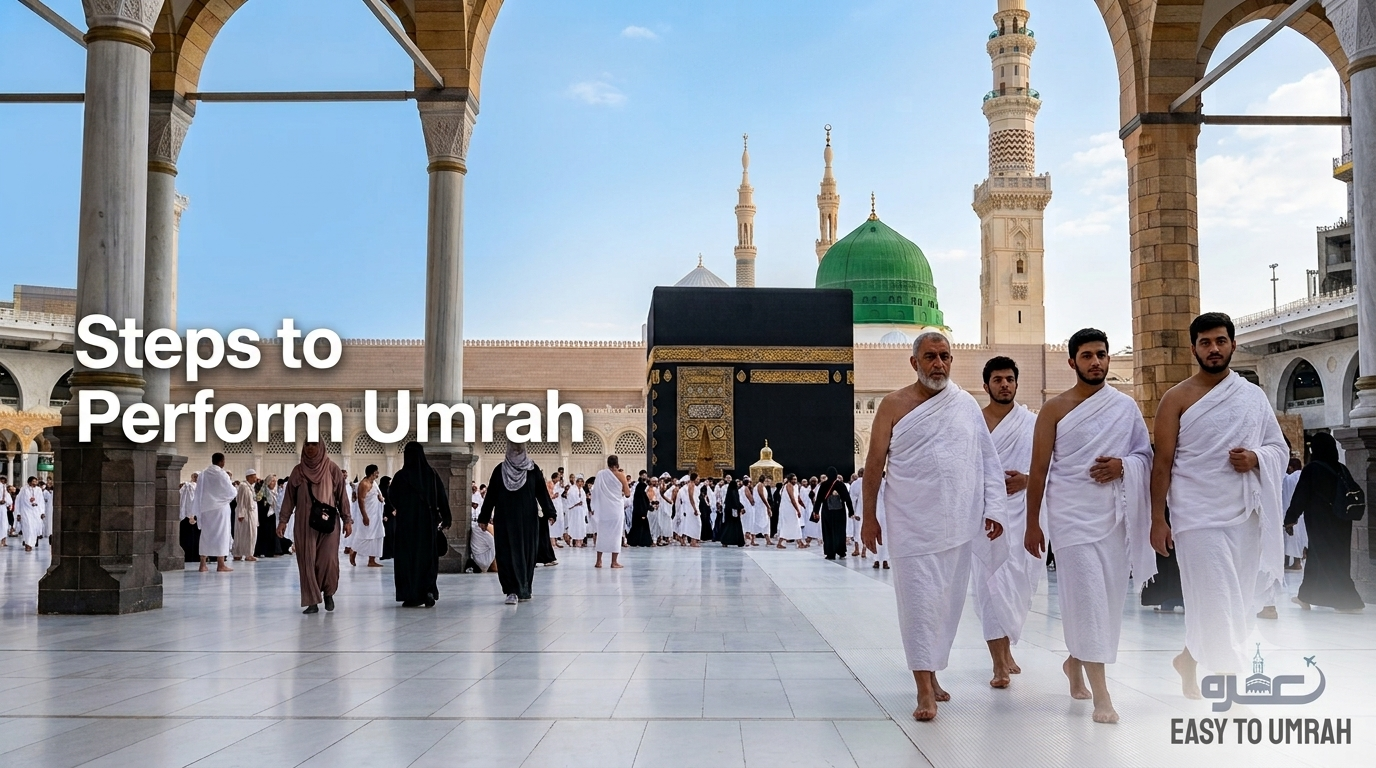
Steps to Perform Umrah: A Complete Step-by-Step Guide for Every Pilgrim
Introduction
Millions of Muslims travel to Mecca every year to perform Umrah, a deeply personal act of worship that pilgrims can undertake at almost any time of year. If you’re preparing for your first journey, you need to understand the exact steps to perform Umrah — not just for spiritual fulfillment, but to make sure you carry out every ritual correctly.
Unlike Hajj, Umrah is shorter and simpler, and it isn’t tied to a specific season, so many people call it the “minor pilgrimage.” However, simple doesn’t mean casual. Each step follows a precise sequence rooted in the Sunnah of Prophet Muhammad (PBUH), and missing or misordering a step can affect the validity of your pilgrimage.
This guide walks you through everything: what Umrah is, why it matters, the exact order of rituals, common mistakes first-timers make, and practical tips drawn from real pilgrim experience. Whether you’re going solo, with family, or through a tour operator, this article will prepare you fully.
Table of Contents
- What Is Umrah?
- Umrah vs. Hajj: Key Differences
- Why Umrah Matters
- Prerequisites Before You Travel
- Steps to Perform Umrah (Step-by-Step Guide)
- Umrah Checklist
- Common Mistakes to Avoid
- Best Practices and Expert Tips
- Dua and Supplications During Umrah
- Frequently Asked Questions
- Internal Linking Suggestions
- External References
- Schema Recommendations
What Is Umrah?
Umrah is a pilgrimage to Mecca that Muslims can perform at any time of the year, and it consists of a fixed set of rituals centered on the Kaaba and the hills of Safa and Marwa.
Hajj, by contrast, is obligatory once in a lifetime for those who are physically and financially able. Most scholars, however, view Umrah as a highly recommended (Sunnah Mu’akkadah) act of worship rather than a strict obligation, though some scholars do treat it as obligatory once in a lifetime as well. Islamic tradition holds that Umrah carries immense spiritual reward and even expiates sins.
Key Facts About Umrah
- Pilgrims can perform it year-round, except during the specific days of Hajj.
- It takes only a few hours to complete once the rituals begin.
- It requires entering a sacred state called Ihram.
- It involves four core rituals: Ihram, Tawaf, Sa’i, and Tahallul (or Halq/Taqsir).
- It doesn’t require the extended rites of Hajj, such as standing at Arafat or stoning the Jamarat.
Umrah vs. Hajj: Key Differences
Many first-time pilgrims confuse Umrah with Hajj. Although both involve visiting Mecca and share some rituals, they differ significantly in obligation, timing, and scope.
| Aspect | Umrah | Hajj |
|---|---|---|
| Obligation | Highly recommended (Sunnah); some scholars view it as obligatory once | Obligatory once in a lifetime (if able) |
| Timing | Any time of year | Specific days in Dhul Hijjah only |
| Duration | A few hours to complete | Several days (typically 5-6) |
| Core Rituals | Ihram, Tawaf, Sa’i, Tahallul | Includes Umrah rituals plus Arafat, Muzdalifah, Mina, Jamarat |
| Physical Demand | Moderate | High |
| Group Size | Smaller, less crowded | Millions attend simultaneously |
Once you understand this distinction, you can set the right expectations before you travel — after all, Umrah tends to be more manageable for first-timers, families, and those with limited time or mobility.
Why Umrah Matters
Umrah holds a unique place in Islamic worship because it combines physical devotion, spiritual reflection, and a historical connection to Prophet Ibrahim (AS), Hajar, and Prophet Muhammad (PBUH).
For many pilgrims, the experience offers:
- Spiritual renewal — a chance to seek forgiveness and reset one’s relationship with faith.
- Historical connection — walking the same paths and performing the same rituals tied to early Islamic history.
- Community and unity — standing shoulder to shoulder with pilgrims from around the world, regardless of nationality or background.
- Flexibility — since it isn’t restricted to a season, families can plan around work, school, or health considerations.
Prerequisites Before You Travel
Before you dive into the ritual steps, you should handle a few practical prerequisites — they matter just as much as spiritual preparation.
1. Visa and Documentation
Saudi Arabia requires a valid Umrah visa, and pilgrims typically arrange it through the Nusuk platform or a licensed travel agent. Make sure your passport has at least six months of validity remaining.
2. Health Requirements
Depending on your country of origin and current Saudi health regulations, you may need certain vaccinations, such as meningitis. Always check the latest requirements directly with official sources before booking travel.
3. Physical Readiness
Umrah involves walking several kilometers, particularly during Tawaf and Sa’i. If you have mobility issues, you can use a wheelchair or request assistance, since Masjid al-Haram offers this widely.
4. Intention (Niyyah)
Before anything else, you need a sincere intention to perform Umrah for the sake of worship. You formalize this intention when you enter Ihram.
Steps to Perform Umrah (Step-by-Step Guide)
This is the core of the process. The steps to perform Umrah follow a specific order, and each step builds on the one before it.
Step 1: Enter the State of Ihram
Ihram is both a physical and spiritual state that a pilgrim enters before crossing the Miqat (designated boundary points around Mecca).
What to do:
- Men wear two unstitched white sheets — one wrapped around the waist, the other over the shoulder.
- Women wear modest, regular clothing that covers the body appropriately, leaving the face and hands uncovered (specific requirements can vary by school of thought).
- Perform ghusl (full-body ritual bath) or wudu (ablution) before wearing Ihram, if possible.
- Pray two units (rak’ahs) of voluntary prayer, if timing allows.
- Make the intention (niyyah) for Umrah, then recite the Talbiyah:
“Labbayk Allahumma labbayk, labbayka la sharika laka labbayk…” (“Here I am, O Allah, here I am. Here I am, You have no partner, here I am…”)
Important restrictions while in Ihram:
- Don’t cut your hair or nails.
- Don’t use perfume or scented products.
- Don’t hunt or kill animals.
- Avoid sexual relations.
- Avoid arguing, fighting, or inappropriate behavior.
- Men shouldn’t cover their heads directly with stitched garments.
Step 2: Enter Masjid al-Haram
Once you arrive in Mecca, you proceed to Masjid al-Haram, the Grand Mosque that houses the Kaaba.
Recommended practice:
- Enter with your right foot first.
- Recite the traditional dua for entering a mosque.
- Approach the Kaaba calmly, without rushing, especially in crowded conditions.
Step 3: Perform Tawaf (Circumambulation)
Tawaf is the ritual of circling the Kaaba seven times in a counter-clockwise direction, starting and ending at the Black Stone (Hajar al-Aswad) corner.
Key points:
- Each circuit is called a shawt; seven circuits complete the Tawaf.
- Men should perform Ramal (brisk walking) during the first three circuits, if crowd conditions allow.
- Touching or kissing the Black Stone follows the Sunnah but isn’t obligatory — if crowds make it unsafe, simply gesture toward it while passing.
- No fixed dua applies to every circuit, though many pilgrims recite the Quran, dhikr, or personal supplications.
- Between the Yemeni Corner and the Black Stone, the Sunnah encourages this recitation:
“Rabbana atina fid-dunya hasanatan wa fil akhirati hasanatan wa qina ‘adhab an-nar.” (“Our Lord, give us good in this world and good in the Hereafter, and protect us from the punishment of the Fire.”)
After Tawaf:
- Pray two rak’ahs behind Maqam Ibrahim (Station of Abraham), if space permits, or anywhere within the mosque.
- Drink Zamzam water, which holds special significance in Islamic tradition.
Step 4: Perform Sa’i (Walking Between Safa and Marwa)
Sa’i commemorates Hajar’s search for water for her son Ismail, and pilgrims walk seven times between the hills of Safa and Marwa to reenact it.
How it works:
- Start at Safa and end at Marwa; this counts as one lap. The return trip counts as the second, and so on, for a total of seven laps.
- Men should jog briskly, if physically able, in the section marked by green lights, since this represents the valley where Hajar quickened her pace.
- Recite dhikr, Quranic verses, or personal supplications throughout.
- When you reach each hill, face the Kaaba and recite the traditional supplications of gratitude and hope, as the Sunnah recommends.
Step 5: Tahallul (Ending the State of Ihram)
The final step is Tahallul, which marks the completion of Umrah and your exit from the state of Ihram.
For men:
- Shave the head completely (Halq) — this earns more reward — or trim the hair (Taqsir).
For women:
- Cut a small portion of hair, roughly the length of a fingertip, from the ends.
Once you complete this step, all the restrictions of Ihram lift, and you have officially completed Umrah.
Summary Table: The Five Steps to Perform Umrah
| Step | Ritual | What It Involves |
|---|---|---|
| 1 | Ihram | Entering a sacred state at the Miqat with intention and specific attire |
| 2 | Entering Masjid al-Haram | Approaching the Kaaba with proper etiquette |
| 3 | Tawaf | Circling the Kaaba seven times |
| 4 | Sa’i | Walking seven times between Safa and Marwa |
| 5 | Tahallul | Shaving or trimming hair to exit Ihram |
Umrah Checklist
Use this practical checklist before and during your journey:
Before Departure
- Valid Umrah visa arranged
- Passport valid for 6+ months
- Required vaccinations completed
- Ihram garments packed (for men) or modest clothing prepared (for women)
- Comfortable, easy-to-remove sandals
- Unscented toiletries
- Copy of key duas and Talbiyah
- Travel insurance and accommodation confirmed
During Umrah
- Intention made and Talbiyah recited before Miqat
- Tawaf completed (seven circuits)
- Two rak’ahs prayed after Tawaf
- Zamzam water consumed
- Sa’i completed (seven circuits between Safa and Marwa)
- Hair shaved or trimmed (Tahallul)
Common Mistakes to Avoid
Even well-prepared pilgrims sometimes make avoidable errors. Here are the most frequent ones:
- Crossing the Miqat without Ihram. Some travelers, especially those flying, forget to enter Ihram before reaching the designated boundary.
- Wearing scented products after entering Ihram, even though this is prohibited.
- Rushing through Tawaf without focus, and treating it as a physical task rather than an act of worship.
- Skipping the two rak’ahs after Tawaf due to crowding — instead, try to find any open space in the mosque.
- Miscounting laps during Tawaf or Sa’i, especially in crowded conditions. A tasbih counter can help you track this accurately.
- Not drinking enough water or taking breaks, which can lead to exhaustion, especially in hot months.
- Assuming Umrah rituals are identical to Hajj, which often causes confusion about what’s required.
- Neglecting Tahallul, and forgetting that the pilgrimage isn’t complete until you cut or shave your hair.
Best Practices and Expert Tips
- Perform Umrah calmly. Crowds can feel overwhelming, so pilgrims who move at a steady pace tend to have a more meaningful experience.
- Go during off-peak times if possible — for example, early morning or late night hours around Tawaf are generally less crowded.
- Keep a small dua booklet or app handy for recitations, especially if you’re not fluent in Arabic.
- Stay hydrated and pace yourself, particularly during Sa’i, since it involves significant walking.
- Travel with a knowledgeable companion or guide if it’s your first time, so you can navigate the rituals correctly.
- Respect fellow pilgrims, especially in crowded areas around the Black Stone — patience is part of the spiritual practice.
Dua and Supplications During Umrah
No single mandatory dua applies to each ritual, but pilgrims commonly recite several supplications based on the Sunnah:
- Talbiyah (recited from Ihram until Tawaf begins)
- Dua between Yemeni Corner and Black Stone during Tawaf
- Personal supplications at Multazam (the area between the Black Stone and the Kaaba’s door)
- Dua at Safa and Marwa, facing the Kaaba after each ascent
You can also make personal, heartfelt supplications in your own language throughout the journey — this part offers more flexibility than the fixed rituals themselves.
Frequently Asked Questions
Umrah Basics
1. What are the basic steps to perform Umrah? The core steps are: entering Ihram, performing Tawaf around the Kaaba, performing Sa’i between Safa and Marwa, and finishing with Tahallul (shaving or trimming hair).
2. Is Umrah obligatory? Most scholars consider Umrah highly recommended (Sunnah Mu’akkadah) rather than strictly obligatory, though some schools of thought view it as obligatory once in a lifetime for those who are able.
3. How long does Umrah take to complete? The rituals themselves typically take a few hours, though your total trip duration will vary based on your travel plans and how long you choose to stay in Mecca and Medina.
4. Can Umrah be performed at any time of year? Yes, you can perform Umrah year-round except during the specific days reserved exclusively for Hajj.
5. What is Miqat? Miqat refers to designated boundary points around Mecca where pilgrims must enter the state of Ihram before proceeding further.
Rituals and Restrictions
6. Do women need to cover their faces during Ihram? Generally, women leave their faces and hands uncovered during Ihram, though practices can vary based on personal conviction and school of thought.
7. What happens if someone breaks an Ihram restriction unintentionally? Depending on the violation, you may need to pay compensation (fidyah). It’s best to consult a knowledgeable scholar or guide if this happens to you.
8. Can Umrah be performed multiple times in one trip? Yes, some pilgrims perform Umrah more than once during a single visit, often entering Ihram again from a nearby Miqat such as Masjid Aisha (Tan’im).
9. What should I wear for Umrah? Men wear two unstitched white sheets, while women wear modest, loose-fitting clothing that meets Islamic dress requirements, without specific color restrictions.
10. What is the significance of Zamzam water? Zamzam is a well located within Masjid al-Haram. It connects to the story of Hajar and Ismail, and Islamic tradition holds that its water carries special blessing.
Practical Logistics
11. Is a guide necessary for first-time pilgrims? It isn’t mandatory, but a knowledgeable guide or group leader can help first-timers perform the rituals correctly and navigate crowded areas.
12. Can children perform Umrah? Yes, children can accompany parents and perform Umrah, though the specific rulings on validity and reward may differ by age and scholarly opinion.
13. What documents do I need to perform Umrah? You’ll need a valid passport, an Umrah visa (often processed through the Nusuk platform or licensed agents), and any health documentation current regulations require.
14. How many times should Tawaf and Sa’i be performed? Both Tawaf and Sa’i consist of seven circuits each — you circle the Kaaba seven times, then walk between Safa and Marwa seven times.
15. What marks the completion of Umrah? Umrah reaches completion once you perform Tahallul — shaving or trimming your hair after finishing Sa’i.