
Masjid al-Dir’ (Armour Mosque) in Madinah: History, Location and Visitor Guide
Masjid al-Dir’ is a historical mosque in the north of Madinah, near Mount Uhud, linked to the Prophet’s ﷺ departure for the Battle of Uhud. Many Umrah pilgrims and visitors to Madinah like to learn about it as part of their ziyarat.
This guide explains where the mosque is, why it is called the Armour Mosque, its other names, its connection to the seerah and practical tips for visiting. If you are planning your trip, you can start your Umrah booking with EasyToUmrah.
[Book Umrah Now] | [Get a Free Quote]
Consult a qualified scholar for religious rulings, and rely on trusted sources for historical details.
What Is Masjid al-Dir’?
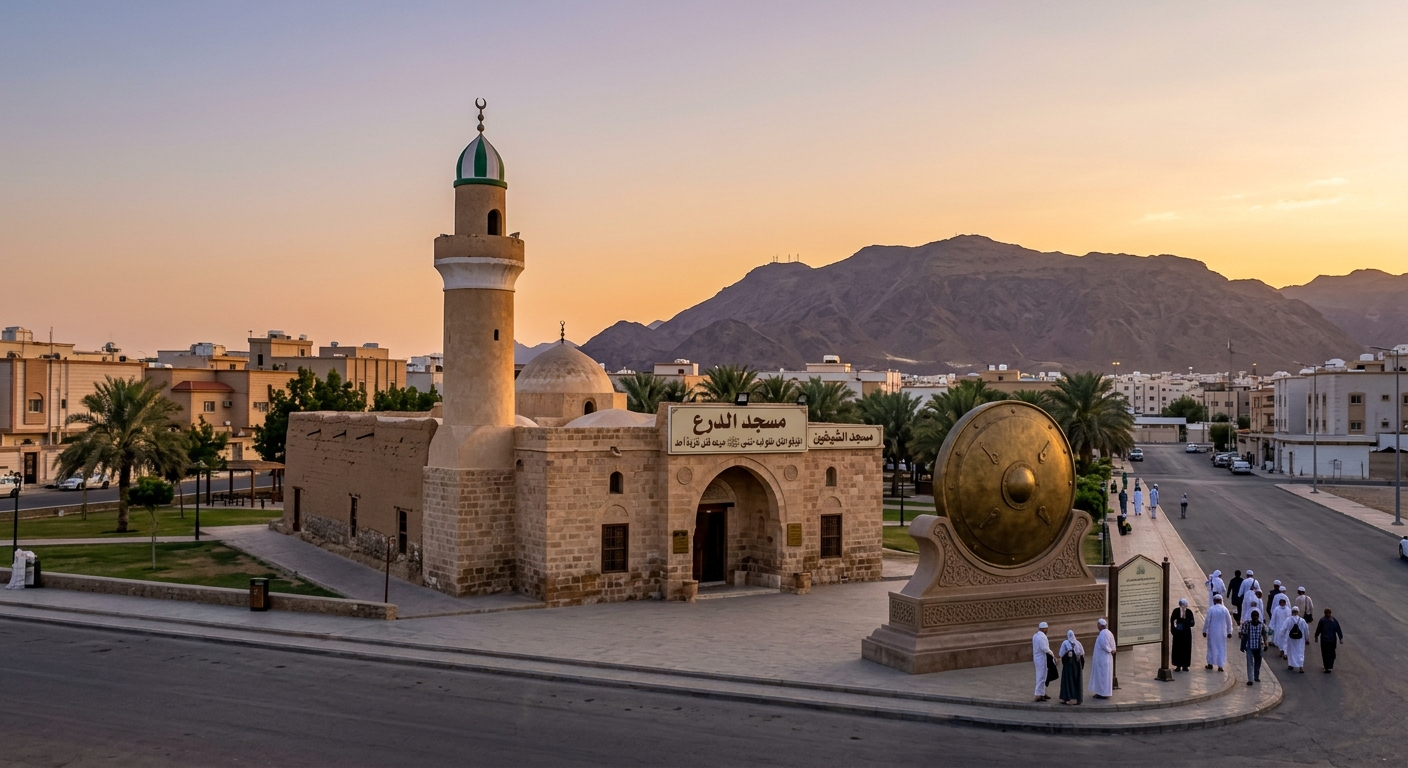
Masjid al-Dir’ is one of the historic mosques of Madinah. Saudi press describes it as a mosque connected with important stages of the Prophet’s biography. It is a small mosque with an old-style building, and visitors come to pray and to learn about its history.
Where Is Masjid al-Dir’?
The mosque lies in the north of Madinah, near the site of the Battle of Uhud, less than two kilometres south of Jabal al-Rumat (the Archers’ Hill). Another source places it between Madinah and Mount Uhud on the eastern road alongside the lava field (harrah).
(Add an exact Google Maps link and the approximate distance from Masjid an-Nabawi. Verify both yourself on a map before publishing.)
Why Is It Called the Armour Mosque?
The name comes from the Arabic word dir’, meaning armour. According to the sources, the Prophet ﷺ stopped at this spot on his way out to the Battle of Uhud and took off his armour there. The reports also say it was where he camped the night before the battle, and that he prayed Asr, Maghrib and Isha there.
Other Names
The mosque is also known as Masjid al-Shaykhayn, Masjid al-Bada’i and Masjid al-‘Udwa. One newspaper suggests the name al-‘Udwa may come from its position on the edge of the road. Another source notes that the name Masjid al-Dir’ is the most widely used among people today.
The Mosque and the Battle of Uhud
According to the commonly cited accounts, the Prophet ﷺ stopped here on the way to Uhud in the third year of the Hijrah. One report says that after spending the night there, he prayed Fajr and then headed toward Mount Uhud. Some of the press accounts use language such as “it is narrated,” so it is best to present these details carefully and not as absolute certainty.
For visitors, the story is a reminder of preparation, reliance on Allah and steadfastness, qualities shown by the Prophet ﷺ and his Companions, may Allah be pleased with them.
Nearby Sites
- Mount Uhud and the battlefield: the closest major historical site.
- Jabal al-Rumat (Archers’ Hill): a well-known location from the battle, less than two kilometres from the mosque according to Okaz.
- Masjid al-Mustarah (Masjid Bani Haritha): said to be where the Prophet ﷺ rested on his return from Uhud, and not far from Masjid al-Dir’.
- Masjid an-Nabawi: the centre of every visit to Madinah.
Many pilgrims combine these places in one short ziyarat tour.
Architecture and Preservation
Saudi press reports say the mosque has been cared for over the centuries, and that the Saudi era saw its complete restoration and renewal. Another report notes that it has recently undergone restoration as part of a plan to restore and maintain historic mosques in the Kingdom. These efforts help visitors and Umrah pilgrims learn about the history of Madinah.
Is There a Special Virtue in Visiting?
Visiting historical sites is mainly for learning from the seerah and reflecting on it. There is no specific ritual or dua for this mosque, and visitors should pray there as in any mosque, without attaching a virtue that has no evidence. If you are unsure about the etiquette of visiting historic places, ask a qualified scholar.
Tips for Visiting Masjid al-Dir’
- Choose a cooler time, such as early morning or after Asr in hot weather.
- Check access and opening times. They may change, so ask your guide or the organising body. (Add confirmed information if you have it.)
- Respect the site. Keep the area clean and quiet, and follow local rules.
- Combine it with nearby sites in one organised trip to Uhud and Jabal al-Rumat.
- Wear comfortable shoes and carry water.
- Elderly travellers: ask about transport and accessibility before you go.
- Photography: follow the rules, and don’t photograph worshippers without permission.
Plan Your Madinah Visit with EasyToUmrah
Knowing the sites is part of your preparation. The rest is the practical side: flights, hotels in Makkah and Madinah, transport and the visa. With EasyToUmrah, you can compare Umrah packages, choose a hotel near Masjid an-Nabawi and complete your booking Umrah request online, with guidance from our team.
[Start Your Umrah Booking] | [View Umrah Packages]
Frequently Asked Questions
Where is Masjid al-Dir’?
It is in the north of Madinah, between the city and Mount Uhud, near Jabal al-Rumat.
Why is it called Masjid al-Dir’?
Because, according to the sources, the Prophet ﷺ took off his armour at this spot on his way to the Battle of Uhud.
What are the other names of Masjid al-Dir’?
It is also called Masjid al-Shaykhayn, Masjid al-Bada’i and Masjid al-‘Udwa.
Is visiting Masjid al-Dir’ part of Umrah?
No. The Umrah rites are performed in Makkah. Visiting Madinah and its sites is not part of Umrah, but many pilgrims do it.
Is there a special reward for praying in Masjid al-Dir’?
Visiting is for learning and reflection. No special virtue is attributed to it without evidence. Ask a scholar if you have questions.
What can I visit near Masjid al-Dir’?
Mount Uhud, Jabal al-Rumat and Masjid al-Mustarah (Bani Haritha).
Can I visit it as part of an Umrah package?
That depends on your package and provider.
Final Thoughts
Masjid al-Dir’ is small in size but rich in meaning, connecting visitors to the Prophet’s ﷺ preparation before the Battle of Uhud. Treat your visit as a time for reflection, and plan your Madinah stay well. May Allah accept your Umrah and ziyarat and make your journey easy.